ISLAMABAD: The government has decided to secure a $1 billion budget support loan from the Asian Development Bank to strengthen climate resilience policies, while deferring approval of a $40 million project due to concerns over excessive spending on equipment and services.
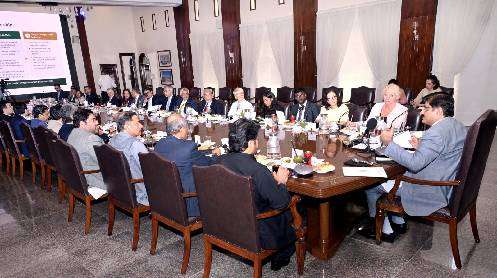
The decision was taken at a meeting of the Central Development Working Party, chaired by Planning Minister Ahsan Iqbal, which granted concept clearance for the second tranche of the Climate Disaster Resilience Enhancement Programme (CDREP).
Under the arrangement, $500 million will be released immediately upon ADB board approval, with the remaining $500 million reserved as contingent financing to address future natural disasters over a five-year period. Officials expect the first tranche to be disbursed before June to help stabilise foreign exchange reserves amid looming external debt repayments.
The loan, sourced primarily from ADB’s Ordinary Capital Resources, will support policy reforms without requiring direct counterpart funding. It will also help Pakistan strengthen disaster risk management, implement the National Disaster Management Plan III, operationalise the National Emergency Operations Centre, and promote climate-resilient investments.
Pakistan, highly vulnerable to floods, droughts and extreme weather, is estimated to require between $30 billion and $60 billion annually to address climate challenges. The programme also aims to establish a disaster risk financing framework targeting mobilisation of Rs200 billion and provide social protection to nearly nine million vulnerable households during crises.
The loan will carry a 15-year tenure, including a three-year grace period, with interest rates linked to ADB’s flexible lending terms.
Meanwhile, the CDWP deferred a $40 million project funded by the World Bank after raising serious objections over proposed expenditures. Concerns centred on the use of foreign loan funds for purchasing laptops, furniture, and hiring consultants at high costs.
Planning Minister Ahsan Iqbal constituted a review committee, led by the vice chancellor of the Pakistan Institute of Development Economics, to scrutinise the project’s financial structure and procurement plans.
Officials noted that a significant portion of the project budget—around 74%—was allocated to consulting services, goods, and IT systems, with high per-unit costs quoted for basic equipment such as laptops, desktops, and office furniture.
The minister emphasised the need for prudent utilisation of foreign loans, noting that past borrowings had often been spent on non-essential items rather than priority development needs.
Story by Shahbaz Rana